
Basement Surfaces Built for Moisture and Use
Basement Floor Coatings in Perry for homeowners addressing damp concrete and staining issues
Basement concrete in Perry often shows moisture staining, efflorescence from mineral deposits, or surface dusting that creates constant cleaning problems. CS Custom Epoxy installs basement floor coatings that seal the concrete, block moisture transmission, and create a finished surface that resists both wear and liquid penetration. The coating system transforms raw, porous concrete into a seamless floor that handles foot traffic, storage use, and occasional water exposure without deteriorating.
The process starts with moisture testing to determine whether vapor is moving through the slab, which affects primer selection and coating compatibility. Once moisture levels are confirmed within acceptable limits, the concrete is mechanically prepared to remove surface contaminants and open the pore structure. Epoxy coatings are then applied in multiple layers, creating a moisture barrier that also provides impact resistance and stain protection suitable for finished living spaces or utility storage areas.
Request a basement floor evaluation to identify moisture conditions and discuss coating options.
How Epoxy Addresses Basement Concrete Problems
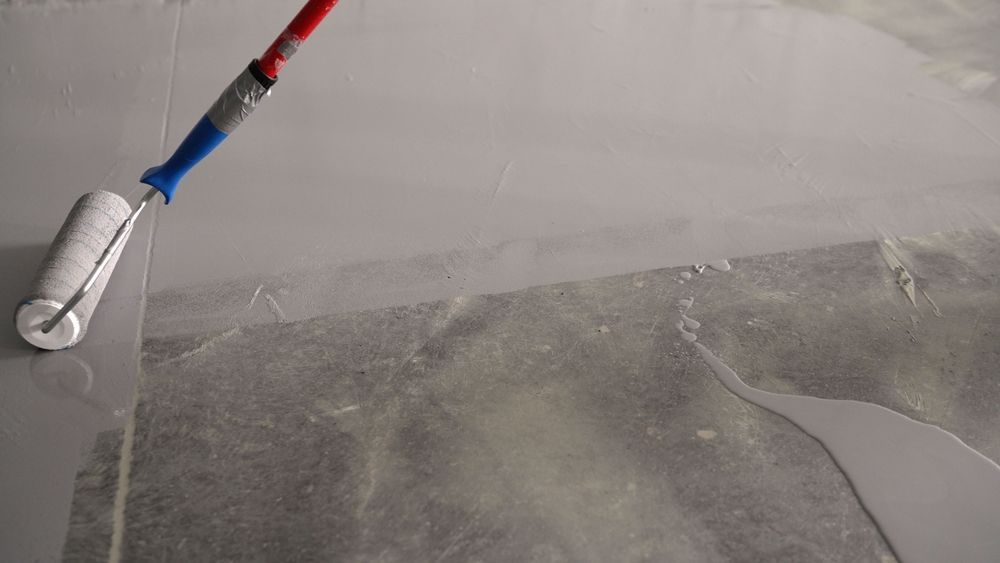
Applying epoxy to basement floors involves more than surface coverage. The slab must be profiled using diamond grinding equipment to remove any existing sealers, paint residue, or weak surface concrete that would prevent adhesion. After profiling, cracks are filled and expansion joints are addressed to prevent telegraphing through the coating. The primer coat penetrates the prepared surface and creates the foundation for subsequent layers, followed by the build coat that adds thickness and the topcoat that seals everything while providing the final appearance and texture.
Once installation finishes, the basement floor no longer absorbs spills or releases concrete dust when you walk across it. Water from occasional leaks or humidity condensation sits on the surface rather than soaking into the slab, making cleanup immediate instead of leaving permanent stains. The seamless finish eliminates the grout lines and seams found in tile installations, which means there are no gaps where dirt accumulates or moisture penetrates. If you previously avoided using the basement for storage due to dust or dampness, the coated surface changes how functional that space becomes.
Basement coatings can include decorative color flakes for visual interest in finished spaces or remain solid colors for utility areas where appearance is secondary to durability. Some homeowners add slip-resistant additives to the topcoat for safety on stairs or in areas where water exposure is common. The coating thickness and primer type also vary depending on whether the basement experiences occasional dampness or has a history of more significant moisture problems that require vapor-tolerant systems.
Common Questions About This Service
Property owners in Perry typically ask about moisture handling and what preparation involves before coating basement floors.
What moisture testing is done before installation?
CS Custom Epoxy performs calcium chloride tests or relative humidity probe testing to measure moisture vapor emission rates from the slab. If readings exceed the coating manufacturer's limits, a moisture mitigation primer is applied first to prevent bonding failures caused by vapor pressure pushing the coating off the concrete.
How does epoxy protect against basement moisture?
The coating creates a barrier that prevents water and vapor from moving through the concrete surface, which stops efflorescence and reduces the musty odor often associated with damp basements. While the coating cannot eliminate moisture problems caused by groundwater intrusion or poor exterior drainage, it does manage typical condensation and minor dampness.
When should basement floors be coated instead of left bare?
Coating makes sense when you plan to use the basement as finished living space, want to eliminate dust and staining, or need easier cleaning for storage and utility areas. Bare concrete continues to absorb spills, release dust, and show surface deterioration that worsens over time.
Why do some basement coatings fail after installation?
Most failures occur due to inadequate surface preparation that leaves contaminants on the concrete, improper moisture testing that misses high vapor emission, or using coatings not rated for below-grade applications. Proper preparation and moisture-appropriate materials prevent these issues.
What happens to existing cracks in the basement floor?
Cracks are filled during preparation using flexible epoxy fillers that accommodate minor slab movement, but the coating cannot prevent new cracks from forming if the concrete continues to settle or shift. The coating does, however, stop existing cracks from collecting dirt and moisture once they are properly filled and sealed.
CS Custom Epoxy evaluates basement conditions throughout Perry to determine which coating system will perform reliably in your specific environment. Arrange a consultation to have your basement floor assessed and receive a detailed estimate based on current slab conditions.