Surfaces Designed to Look Different Every Time
Metallic Epoxy Flooring in Perry for showrooms and interior spaces where visual impact drives design decisions
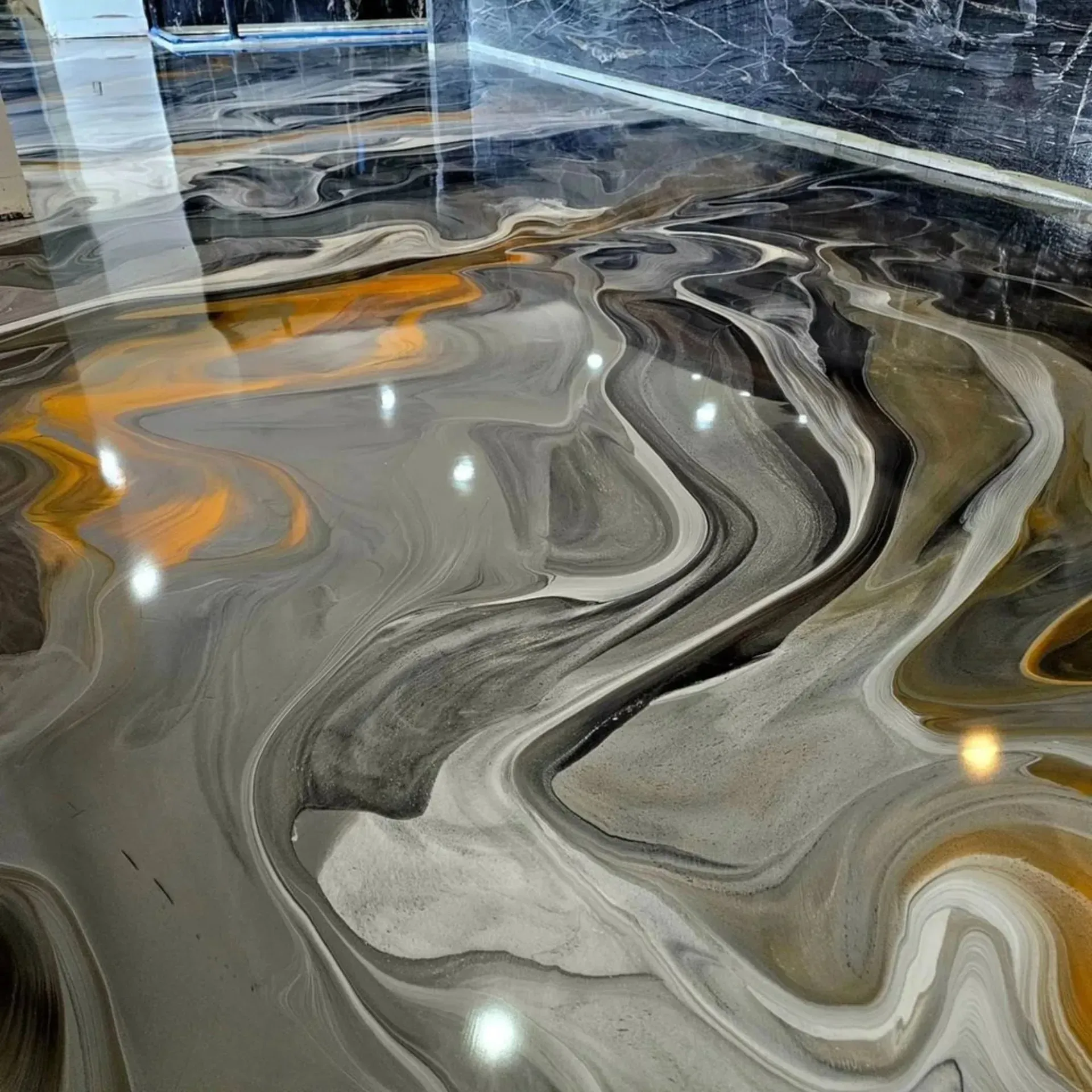
Metallic pigments mixed into epoxy resin create flowing, three-dimensional patterns that shift as you walk around the room, with no two installations producing identical results even when using the same color combinations. The installation process CS Custom Epoxy follows includes moisture testing to verify the slab won't release damaging vapor, concrete grinding to create the mechanical bond profile, repairing cracks and surface defects, cleaning away all dust and debris, applying an epoxy base coat, adding the metallic design coat while manipulating the material to create movement patterns, and finishing with a high-gloss clear coat that amplifies depth and protects the metallic layer underneath. You get a custom floor that works as a design feature rather than a background surface, with durability that handles foot traffic, spills, and furniture movement in residential and commercial settings.
The metallic coat behaves differently than standard pigmented epoxy because the metallic particles shift and flow as the resin moves, reacting to application tools, ambient temperature, and how long the installer manipulates the material before it begins to gel. This unpredictability creates the unique patterns but also means the final appearance depends on installer skill and real-time decision-making during application. Proper concrete preparation remains critical because any surface contamination or inadequate profile will cause delamination regardless of how striking the metallic design looks initially.
Request a free consultation to review metallic color options and discuss pattern styles that match your space and design vision.
What Changes After Installation Completes
Each metallic floor develops its own pattern based on how the installer works the material, environmental conditions during application, and the specific pigment blend used. The grinding and repair work happens first to eliminate anything that would show through the translucent metallic layer or interfere with adhesion. Once the epoxy base coat cures, the metallic design coat goes down and gets manipulated with rollers, brushes, or tools to create swirls, waves, or abstract patterns before the resin sets.
After the clear topcoat cures, the floor reflects light with a wet-look gloss that makes the metallic particles appear suspended in depth. You'll see the pattern change as lighting angles shift throughout the day, and the seamless surface cleans with simple mopping since there are no grout lines or seams where dirt accumulates. Spilled liquids sit on top rather than staining, and the chemical-resistant topcoat protects against cleaning products, cosmetics, or food and beverage spills in residential kitchens and dining areas.
The system maintains its appearance without waxing or refinishing, unlike natural stone or tile that require periodic sealing. Retail spaces benefit from floors that draw attention and reinforce brand identity, while office lobbies gain a premium aesthetic that differentiates the space from standard commercial flooring. Homeowners installing metallic floors in living areas should understand that furniture legs and high heels concentrate weight into small points that can dent the coating over time, so area rugs or furniture pads help preserve the finish in heavy-use zones.
Answers to Frequent Service Questions
Customers planning metallic installations in Perry usually want to understand design control, maintenance requirements, and how the system performs compared to other decorative concrete options.
How much control do you have over the final metallic pattern?
Installers guide the general pattern direction and density, but the metallic particles create organic movement that can't be precisely replicated, so approving the color palette and pattern style upfront matters more than expecting an exact preview of the finished result.
What substrate conditions prevent metallic epoxy installation?
Active moisture migration above manufacturer vapor limits, severely spalled or cracked concrete requiring extensive repair, and existing coatings that can't be fully removed all create adhesion problems that make metallic systems impractical without addressing the underlying issues first.
Why does metallic epoxy cost more than standard flake systems?
The metallic pigments themselves cost significantly more than color flakes, the application requires more time and skill to manipulate the flowing patterns, and the translucent nature of the coating shows every substrate imperfection so preparation standards are higher.
When does humidity in Perry affect installation timing?
High humidity slows cure times and can cause surface imperfections as moisture condenses on the uncured resin, so installations scheduled during cooler months or humid weather may require climate control to maintain proper temperature and relative humidity during application and cure.
What cleaning products preserve the metallic appearance long-term?
pH-neutral cleaners prevent topcoat degradation that dulls the gloss, while avoiding abrasive scrubbing tools protects the clear layer that amplifies the metallic depth, keeping the floor looking wet and reflective for years.
CS Custom Epoxy designs every metallic floor as a custom installation based on your color preferences, space dimensions, and how much pattern movement you want visible. Schedule a consultation at (423) 231-8815 to discuss metallic options and see color samples for your showroom, office, or residential project.