
Concrete Finished Without Additional Coatings
Polished Concrete in Perry for commercial and residential spaces requiring low-maintenance flooring
Warehouses, retail stores, and modern homes in Perry increasingly use polished concrete as a finished floor surface rather than covering it with additional coatings or materials. CS Custom Epoxy mechanically refines concrete to create a smooth, reflective surface that resists wear and requires minimal maintenance compared to coated or tiled floors. The process involves progressively finer diamond grinding steps that remove surface irregularities and expose aggregate, followed by chemical densifiers that harden the concrete and polishing pads that develop the final sheen.
Polished concrete works by transforming the concrete itself rather than applying a separate layer on top. Diamond tooling removes weak surface material and grinds the slab to a consistent plane, while densifying chemicals react with calcium hydroxide in the concrete to form calcium silicate hydrate that fills pores and increases surface hardness. The result is a durable, cleanable floor that improves light reflectivity in commercial spaces and provides a contemporary aesthetic in residential applications without the ongoing maintenance that coatings require.
Schedule an evaluation to determine if your concrete is suitable for polishing and discuss finish levels.
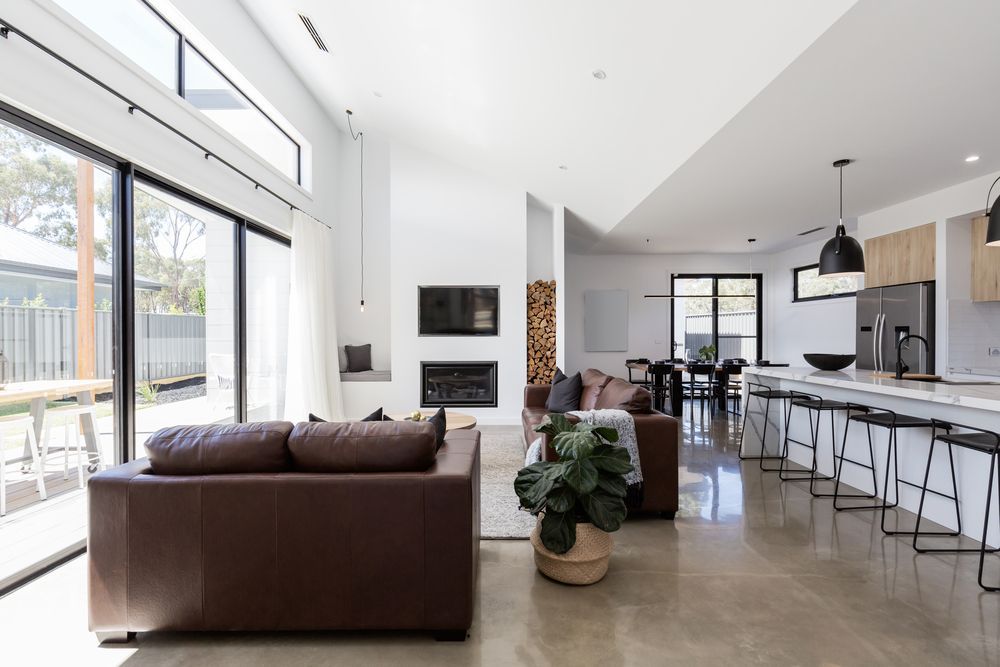
What Polishing Actually Accomplishes
The polishing process begins with assessing the existing slab for cracks, spalling, and aggregate quality, since not all concrete is suitable for polishing. Diamond grinding equipment removes coatings, adhesives, and the weak surface layer, then progressively finer grits smooth the surface while exposing the aggregate to the desired level. Densifiers are applied after initial grinding to chemically harden the concrete, followed by additional polishing steps using resin-bonded pads that develop the gloss level. The final sheen ranges from matte to high-gloss depending on how many polishing steps are completed and what grit level is used in the final pass.
After polishing is finished, the floor reflects overhead lighting in ways that raw concrete does not, which brightens spaces and reduces the number of fixtures needed to achieve adequate illumination. Dust generation stops because the densified surface no longer sheds concrete particles the way untreated slabs do. Cleaning becomes simpler since spills and dirt sit on the hardened surface rather than absorbing into porous concrete, and routine maintenance involves only dust mopping and occasional damp cleaning with neutral cleaners. The floor does not require waxing, stripping, or recoating, which eliminates the recurring labor and material costs associated with maintaining other flooring types.
Polished concrete is not appropriate for every situation. Slabs with extensive cracking, poor aggregate quality, or significant surface damage may not polish well and could require coating instead. Exterior concrete is generally not polished due to freeze-thaw concerns and the difficulty of maintaining a polished finish under weather exposure. The process also generates noise and dust during grinding, which requires planning in occupied spaces. Some homeowners and facility managers prefer the appearance of exposed aggregate, while others choose a tighter polish that minimizes aggregate visibility for a smoother look.
Common Questions About This Service
Customers throughout Perry often ask about the difference between polished concrete and coatings, along with what maintenance is required.
What is the difference between polished concrete and epoxy coatings?
Polished concrete refines the existing slab surface without adding a separate layer, while epoxy coatings apply a protective film on top of the concrete. Polishing cannot delaminate or peel because there is no coating to separate, but it also cannot hide significant surface damage or discoloration the way pigmented coatings can.
How does polishing improve light reflectivity?
The smooth, densified surface created by polishing reflects light more uniformly than rough concrete, which scatters light and appears darker. In commercial facilities, this improved reflectivity can reduce lighting requirements by making better use of existing fixtures.
Why is proper preparation emphasized for polished floors?
Polishing only refines what is already present in the slab, so any cracks, stains, or surface defects will remain visible in the finished floor. CS Custom Epoxy evaluates the concrete condition before polishing to identify repairs needed and ensure the final appearance meets expectations.
When is polished concrete more suitable than coatings?
Polishing makes sense for facilities where ongoing maintenance costs are a concern, where a natural concrete appearance is desired, or where coatings would require frequent renewal due to heavy traffic. Retail spaces, showrooms, and modern residential interiors often choose polished concrete for its clean, industrial aesthetic.
What maintenance does polished concrete require after installation?
Routine cleaning involves dust mopping or auto scrubbing with neutral pH cleaners, and periodic repolishing using high-speed burnishing equipment maintains the gloss level. Unlike coated floors, polished concrete does not require stripping, waxing, or recoating, though the surface may need diamond repolishing after several years of heavy traffic.
CS Custom Epoxy provides polished concrete services throughout Perry for commercial and residential clients seeking durable, low-maintenance flooring. Arrange a consultation to have your concrete assessed and receive a detailed estimate based on current slab conditions and desired finish level.